July 2026 F5P Data Highlights

Top 5 Micro-Markets to Watch Right Now
Marshall County, MS | Jabil's Second Bet in a Year Signals Deepening Confidence
Jabil is investing more than $119 million to open a new production facility in Marshall County, purchasing and renovating an existing 1.5 million square foot building to serve the data center infrastructure market, a project expected to create approximately 2,200 jobs. It follows a September 2025 announcement that Jabil's healthcare division would invest roughly $70 million over three years to add X-ray sterilization capacity in the same county. Two major commitments from one company inside a year is a strong signal for a rural North Mississippi county near the Tennessee border. The Mississippi Development Authority is backing the project through its Flexible Tax Incentive program. Thousands of new manufacturing jobs could meaningfully tighten local housing supply and pull rental demand from nearby Memphis submarkets. F5P will track absorption here as hiring ramps.
Greenville County, SC | Isuzu's Piedmont Plant Moves From Groundbreaking to Hiring
Isuzu Truck North America is opening its first US manufacturing plant in Greenville County, a $280 million investment announced in February 2025 that broke ground in October in Piedmont and is expected to fully launch in 2027, creating 700 total jobs assembling up to 50k trucks annually. The company held a hiring event on July 8 to begin filling more than 150 production, maintenance, and logistics roles, a sign the project has moved from paper commitment to operating reality. Greenville has drawn manufacturers for years on the strength of its workforce pipeline, including ties to Greenville Technical College. As Isuzu's positions come online through 2027, expect steady household formation and rental demand in the Piedmont submarket, an area that has historically lagged Greater Greenville's apartment development.
Bexar County, TX | Toyota Doubles Its San Antonio Footprint
Toyota is investing $3.6 billion to add a second vehicle assembly line at its San Antonio campus, adding 2.5 million square feet and doubling the plant's size by 2030 while shifting Tacoma production from Toyota's Baja California plant to the US over roughly four years, creating 2k new jobs at a site that already employs thousands building Tundras and Sequoias. The expansion adds to a wave of Texas reshoring announcements this year and reinforces San Antonio's standing as one of the state's largest industrial employers. For a metro that has absorbed heavy multifamily supply in recent years, 2k durable manufacturing jobs on the city's south side is a rare demand catalyst untied to tech or energy price cycles.
York County, PA | Kratos Triples Its Defense Manufacturing Footprint
Kratos Defense and Security Solutions opened a 167k sqft advanced manufacturing facility in York on July 15, its third facility in the county, alongside more than $7 million in planned equipment investment, pushing its York County headcount above 440. The new plant expands production capacity for hypersonic systems, directed energy weapons, missile transporters, and counter-drone hardware, part of a broader defense manufacturing buildout tied to rising Pentagon demand. It layers onto an already established industrial base in south central Pennsylvania. York offers relatively affordable land and housing compared to Philadelphia or the DC suburbs, and defense contractor hiring here has historically supported steady, moderate-income household growth rather than the sharp spikes typical of Sun Belt manufacturing hubs.
Washtenaw County, MI | A $16 Billion Data Center Becomes Michigan's Largest Investment Ever
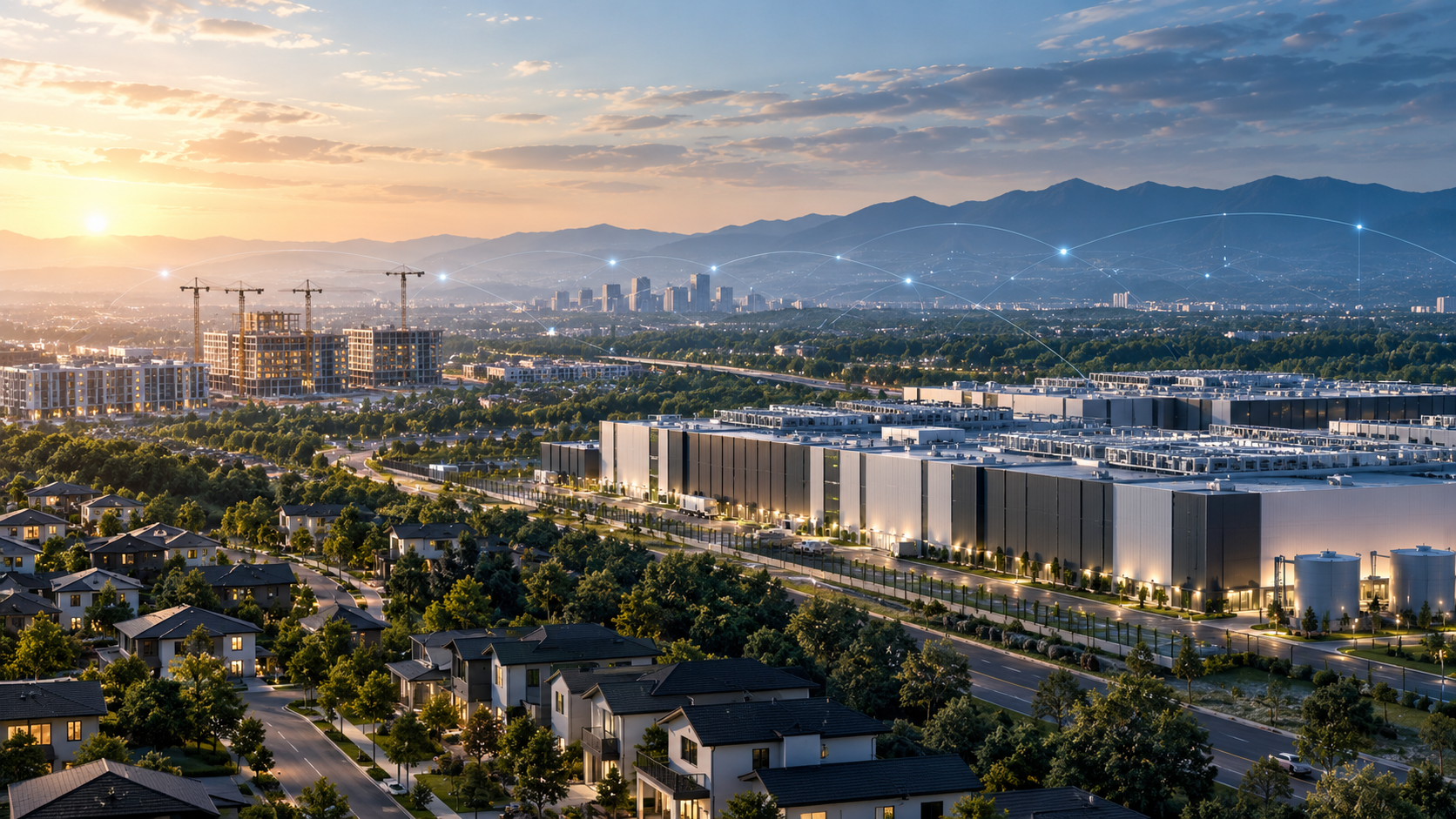
Related Digital broke ground June 1 on Saline Barn, a $16 billion data center project that Michigan Gov. Gretchen Whitmer called the state's largest economic investment ever made, with Detroit contractor Walbridge citing it as the largest project in its 110-year history. The 250-acre campus near Ann Arbor is being built for Oracle and OpenAI as a 1.4-gigawatt-scale site with three 550k sqft buildings. It sits inside a broader Midwest data center wave, alongside new capacity in Ohio and Indiana, where developers are drawn by shorter grid interconnection timelines than PJM's congested Mid-Atlantic markets can offer. For Washtenaw, a county already tight on housing next to Ann Arbor, the construction workforce alone could strain local rental supply well before the campus comes online.
Sunbelt Migration Boom Has Shifted Into a New Phase
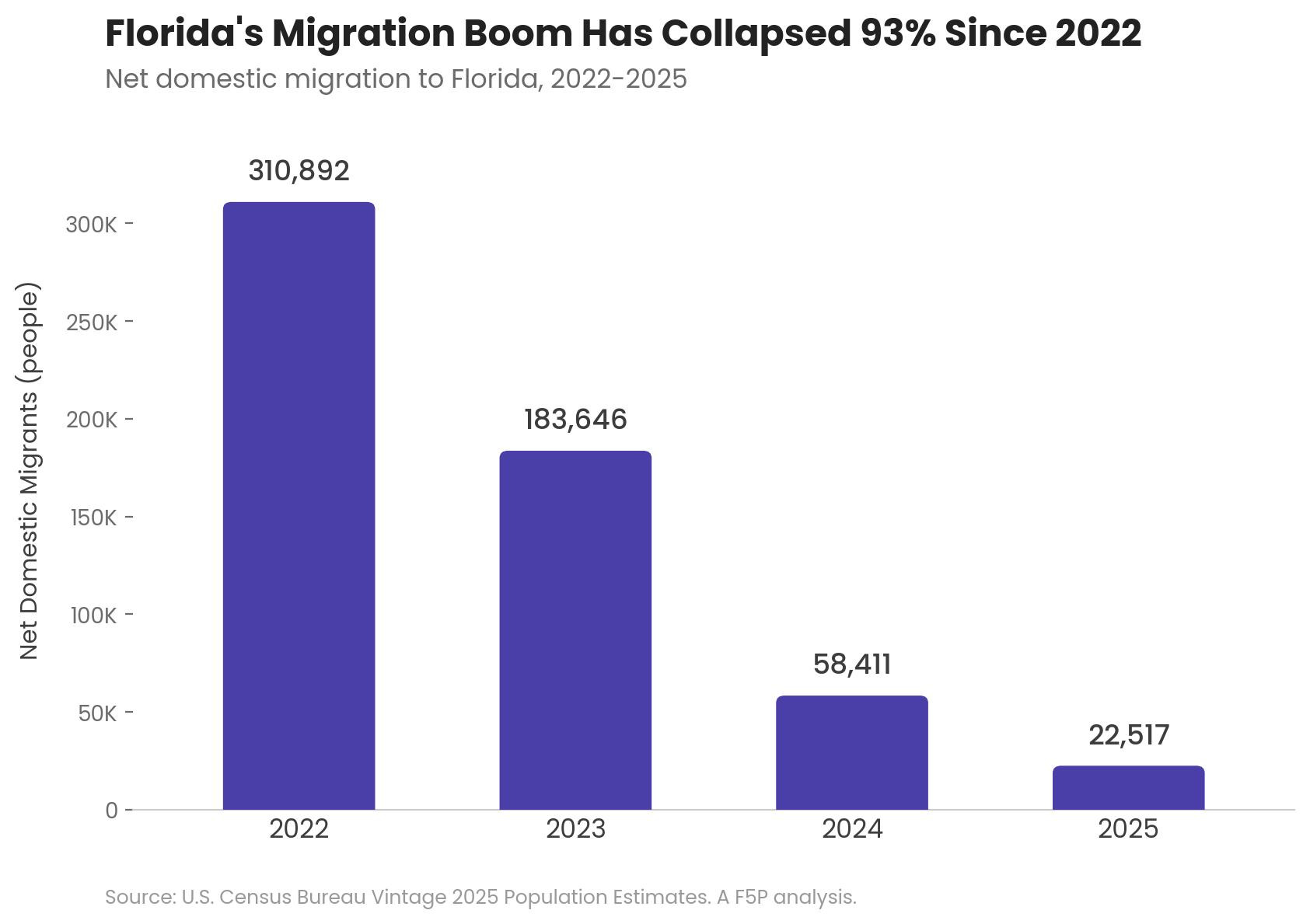
Florida's migration boom is no longer operating at pandemic speed. According to the latest U.S. Census estimates, Florida's net domestic migration peaked at 311k people in 2022 before falling to just over 22k in 2025, while overall migration has also slowed substantially as international migration eased. The deceleration extends beyond Florida. Many of the Sun Belt's fastest-growing metros are seeing slower population gains than they did just a few years ago, even as housing deliveries remain elevated. Rather than disappearing, migration is becoming more selective, with growth increasingly shifting toward smaller and more affordable counties instead of the largest, highest-cost metro areas.
For multifamily operators underwriting rent growth based on pandemic-era migration trends, the message is clear: the extraordinary demand tailwinds of 2021 through 2023 have largely normalized. Markets that added the most supply during the migration surge now face a more balanced renter pipeline, increasing the importance of local employment growth, affordability, and competitive positioning over broad Sun Belt population momentum.
Data Center Construction Is Quietly Redirecting Migration to the Midwest
Even as overall population growth moderates nationally, a new wave of AI infrastructure investment is reshaping parts of the Midwest. Multibillion-dollar data center campuses announced across states including Ohio, Michigan, Wisconsin, and Iowa are generating years of construction activity and significant capital investment in markets that have historically experienced modest population growth. While it is still too early to conclude that these projects are materially redirecting migration patterns, they are creating meaningful new sources of housing demand during extended construction periods and strengthening the long-term economic outlook for selected submarkets. Washtenaw County's newly launched $16 billion data center campus, featured in this month's micromarket section, illustrates the scale of investment now reaching the region. For multifamily investors, these projects warrant closer attention, particularly where sustained construction employment and complementary business investment could support renter demand well before permanent operational staffing reaches full scale.